
While salary growth may range from a marginally positive to stagnant or even negative, the increment for some of the "super-specialised" profiles can go beyond 15%.

New participants included Chinese players such as Great Wall Motors and Haima Automobile along with Olectra.

German machine tool exports to India have been growing at double digit figure since 2002. Moreover, German exports saw an increase of 23 percent in the first half of 2007 compared to the same period last year, Chairman of VDW, the German Machine Tool Builders' Association, Carl Martin Welcker said on Thursday.

The US has been, historically, a sleeping partner in India-China relations. Today, any attempt by the Modi government to make a bilateral move to improve relations with Beijing could upset Biden's apple cart, notes Ambassador M K Bhadrakumar.

Apart from IT and pharma, the lead spenders in travel are construction, automobile and metals and mining companies and together these sectors accounted for 82 per cent of business travel spend in India in 2015, up from 78 per cent in 2013.
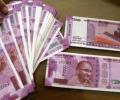
With India's imports exceeding exports, weak rupee does more harm than good. Analysts, however, say that rupee depriciation is positive for export-oriented sectors such as IT services, pharmaceuticals, textiles and automobiles
After Formula One's expected high profile entry into the country, Indian motorsport fans may get the opportunity to have a glimpse of A1GP race by 2009.

In light of the recent incidents involving scooters from prominent electric mobility brands bursting into flames, the subject of electric vehicle (EV) safety has come under the spotlight. As many as 20 electric scooters of Nashik-based Jitendra EV Tech caught fire after being loaded on a transport container. While no one has been reported injured, the company said it is conducting an investigation to find the 'root cause' of the fire.
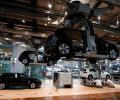
Dealers say the significant increase in sales was driven by a need to plug the diminishing inventory as most dealerships were transitioning from BS-IV to BS-VI when the Covid-19 lockdown was announced.

The muted expectation of dealers come at a time when vehicle manufacturers such as Maruti Suzuki, Hyundai Motor, Mahindra & Mahindra and others reported a double-digit fall in wholesale dispatches to dealerships in July and August.
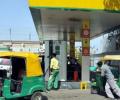
Prices of natural gas, which is used to generate electricity, make fertiliser and is converted into CNG to run automobiles, is likely to rise to record levels at the rate review scheduled this week, sources said. The government-dictated price for natural gas produced in the country is to be revised on October 1. After factoring in the spike in energy prices witnessed in recent months, the rate paid for gas produced from old fields such as of state-owned Oil and Natural Gas Corporation (ONGC) is likely to rise to $9 per million British thermal units from current $6.1.
The eighth Auto Expo kicks off on Thursday promising new launches and big announcements by domestic and global automobile giants, even as the booming industry sought flexibility in labour laws to maintain the growth momentum.
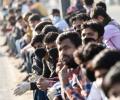
16 national and regional industry bodies and sectoral business lobbies video-conferenced with Commerce and Industry Minister Piyush Goyal on Saturday and raised key concerns facing Indian industry in the wake of the 21-day lockdown over coronavirus.

Hero MotoCorp, Honda Motorcycles, Scooters India, TVS, Honda India, Toyota Kirloskar Motor, Ford, Nissan, Ashok Leyland are all giving the Auto Expo a miss this time.

Recently, South Korean Foreign Minister, Chung Eui-yong, dialled his Indian counterpart, S Jaishankar, in New Delhi. His government, he said, "regretted the offence caused to the people of India". A day earlier, India had summoned the South Korean ambassador to express its "strong displeasure" over "an unacceptable social media post".

However, the World Bank has projected India's GDP growth rate at 7.5 per cent for the next three financial years, including the current one.

On Day One of the lockdown announced by the Maharashtra Government, it wasn't business as usual for automobile manufacturing units in the State. Confusion prevailed over regulations-what is allowed and what isn't. While some units ran with less than half the workforce, others sought clarity from the government on what is permissible and what isn't.

Tata Motors, India's third largest passenger vehicle maker, took pole position in the competitive sport utility vehicle (SUV) market in October, reveals the data from industry sources. Riding high on the Punch - the sub-compact SUV offering launched on October 18 - the Tata group flagship sold a record 23,381 units in October, higher than 20,022 units sold by archrival Mahindra & Mahindra, 18,538 units sold by Hyundai Motor India, and 15,931 units sold by Kia Motors India. Utility vehicles - that include SUVs and multipurpose vehicles - accounted for almost one in every two passenger vehicles sold in India in the first seven months of the current financial year, according to the Society of Indian Automobile Manufacturers.

Auto sales, particularly of two-wheelers, may not bounce back immediately and may take another two months to come back on track even as car bookings have started seeing an initial uptick. Various states started Unlock 2.0 on Monday, following a fall in the number of Covid-19 cases. Auto sales were hit in May following the impact of Covid-led lockdowns.

Maruti Suzuki India continued its grip in the passenger vehicles market in India with five of its models in the top ten best selling models in June.
GST collections in February grew 18 per cent to over Rs 1.33 lakh crore in February even as the Omicron wave dented the month-on-month collection momentum. This is for the fifth time in the current fiscal that the Goods and Services Tax (GST) collection has crossed Rs 1.30 lakh crore mark. Also, this is the first time, cess collection has crossed the Rs 10,000 crore mark, signifying recovery in certain key sectors, especially automobile sales, the finance ministry said on Tuesday.

Mercedes Benz, BMW and Audi have sharply increased their sourcing from India.
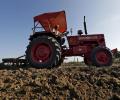
This rise was spurred by record kharif sowing - after a good rabi season - that ensured high disposable incomes in rural India.

With entry-level cars being preferred amid the pandemic, market leader Maruti Suzuki has strengthened its hold, along with Hyundai Motor India.

The compact segment where Sonet will be launched is crowded with the Maruti Vitara and Brezza, which top the sales' list, and a bevy of models from Mahindra & Mahindra apart from Hyundai's offering. But volumes in this are slightly higher than those in the mid-segment, making it attractive, says Surajeet Das Gupta.

The government hopes that the PLI schemes would provide 200,000-300,000 direct employment over five years, according to sources in the know.

The first leg of the 35-day festive period, which ended with Dussehra, failed to bring any cheer for auto companies. While makers of passenger vehicles struggled to meet demand due to the persistent shortage of semiconductors, a recovery in demand remained elusive for two-wheeler manufacturers despite offers and schemes. The overall season, which ends two days after Diwali, is unlikely to bring any turnaround in either the supply or the demand scenario, said dealers and officials at auto companies.

First off the block will be a new multi-purpose vehicle which is being co-developed with Toyota - Suzuki's alliance partner. The model will also wear a Toyota badge.

India's water future remains very bleak. The monsoon season, which once extended to 4 months, is now down to less than 30 days of heavy rain.

Retail sales of passenger vehicles - the largest component of the pie - jumped 11 per cent year-on-year in October to 248,036 units, largely because of discounts offered during Navratri and Diwali.

Indian auto industry's dependence on China is high and it will continue to be so in the BS-VI era and as the country moves towards electric mobility. Domestic players lack both technological competence and the sheer pricing advantage that support Chinese imports.

India on Sunday announced temporary suspension of e-visa facility for Chinese travellers and foreigners residing in the neighbouring country and issued a fresh advisory saying anyone with travel history to China since January 15 can be quarantined.

For Mahindra & Mahindra (M&M), which has just started executing a comeback strategy for wresting back ground it lost to rivals, this could not have come at a worse time. The maker of the Bolero Neo and the Thar models on Thursday said it would have to halt production at its automotive plant for a week due to the worsening supply situation of semiconductors.

The $100-billion SAIC would have a dedicated manufacturing facility in India, and would be the first Chinese automaker to do so.

Owing to the poor market conditions and tepid sentiments, the size of the show has shrunk compared to the last edition, which took place in 2018. A majority of the two-wheeler makers, and several car and commercial vehicle makers, have opted out of this year's show, which opens for the media on Wednesday.
After a very weak December quarter and a poor year-to-date fiscal year volumes-when sales plunged to the lowest in nine years, the signs in the first 15 days of January haven't been encouraging either. "Though the severity of the current wave is not as high as the previous one, it has hit the sentiments hard impacting conversion of enquiries into sales," said Vinkesh Gulati, president, Federation of Automobile Dealers Association (FADA).

The auto component industry caters to automobile industry through a whole gamut of auto parts such as engine parts, body & chassis, electrical parts, drive transmission & steering parts, braking, suspension etc.

While commercial vehicle (CV) sales were the worst hit, down by 21 per cent to 67,793 units from 85,833 units, two-wheeler sales dropped by 16 per cent to 12,64,169 units from 15,00,545 units. Passenger car sales dropped nine per cent to 215,716 units from 236,586 units.

Maruti Suzuki India's grip on the country's car market tightened in October with six of its models, including the newly launched mid-sized sedan Ciaz, featuring in the top 10 selling brands in the month.
For automakers, the festive season is about raking it in through ramped up sales and attractive consumer offers. However, despite the robust demand, what may spoil the party this year is a global shortage of semiconductors.
